
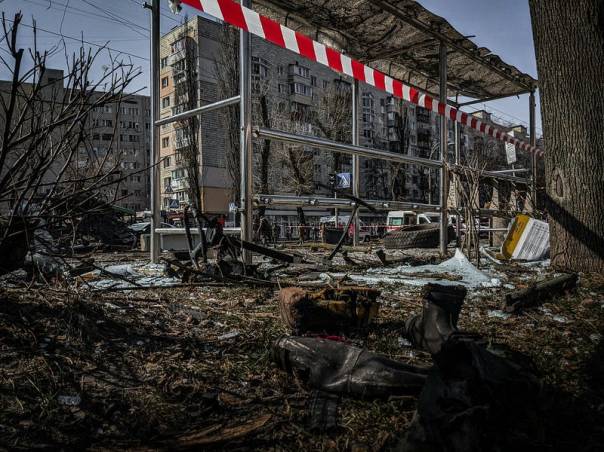
Last year brought many calamities and disasters, but this year has started on a heavier note, and January isn’t even over. Be it the Earthquake in Tibet, the continuing wars and floods in the Middle East, the ongoing famine and Civil War in Sudan, or the fires in Los Angeles, these are some of the many disasters (both Natural and man-made) ravaging the world. The impact of these calamities and disasters is far-reaching on personal and socio-cultural levels.
What is Collective Trauma?
Psychologists have studied the impact of wars, natural calamities, social unrest, and violence for many years. There is no denying that they leave their marks on society even if they are of varying intensity and often the impact surpasses time and space. When we see a person who has been traumatized or has been diagnosed with PTSD, we may notice them being restless, depressed, anxious, having problems with sleep, experiencing flashbacks, or becoming emotionally reactive. This can look very similar in people who experience collective trauma.
Collective Trauma is a term used to describe the psychological effects that govern the reactions of an entire society/community affected by a catastrophe or disaster. It goes beyond merely remembering the events themselves but also encompasses the collective memory of the trauma suffered by the survivors. Not only that, but collective trauma also includes the persistence of these collective memories among group members (of society/community) who haven’t directly experienced them. However, experiencing the traumatic event by the direct survivors affects how the later generations or people living in different places remember or experience the same events (Herschberger, 2018). With globalization, The collective experience of dealing with disasters (man-made or natural) has also expanded. The aftermath of disasters in one part of the world often echoes across borders, making us too aware of our shared vulnerability and humanity.
Types of disasters that cause trauma on a Collective scale
Almost every natural and man-made disaster has the potential to scar and traumatize people both physically and emotionally (Meridian Team, 2022).
Natural Disasters like – earthquakes that destroy property and life, wildfires, floods, cyclones.
Man-made Disasters like- bombings, wars, death caused by damage to properties (like a bridge collapsing), life-threatening accidents, terror attacks, or other similar phenomena.
Irrespective of the cause, experiencing something life-changing can leave people feeling helpless, confused, scared, and very vulnerable.
What can Collective Trauma look like for People?
Trauma can alter a person to varying extents but when many people go through something tragic together, it takes a toll on a collective level too. It isn’t surprising that many might feel depressed, restless, have difficulty trusting others, have difficulty concentrating, have post-traumatic stress disorder, anxiety, or difficulty sleeping after a disaster. In some extreme situations, people may also have suicidal ideations (Karim et al., 2024, Tunçel, 2023).
What may contribute to individual differences?
The intensity of these experiences is usually also affected by the degree of the impact of these disasters. People’s differences concerning family, financial status, ease of accessing support, socio-economic status, physical health (after the event), behavioral health predispositions, and levels of support provided (with food, shelter, medical interventions) by authorities or volunteers can have a lot of impact on how everyone is affected. This also highlights that even if collective trauma is experienced, individual differences in intensity may exist (Tunçel, 2023).
Is there a Silver Lining too?
Disasters can pervade the lives of humans and every other living thing in many destructive ways and yet, we can persevere- that is nothing short of extraordinary (Tunçel,2023). Research indicates that people also experience positive changes after a traumatic event which could include better abilities to cope with stress, increase in self-esteem and self-perception, learning to change priorities after the event, improvement in relationships, and trying to develop meaningful connections. Some people may want to focus on community work, an increased sense of spirituality, or religiosity as a way of meaning-making which can also help people connect with others with similar experiences. This indicates what is termed post-traumatic growth.
A paper by Tedeschi and Calhoun suggested that this phenomenon can be experienced by an entire community or country wherein people reconstruct newer meanings and identities collectively and set up new social norms, new values, and new purposes- thus contributing to social post-traumatic growth. However, it understandably takes some time to go through these changes (Tedeschi & Calhoun, 2004).
The world around us can shape us in different ways and when there is mass-scale destruction, it isn’t surprising to realize its impact on us. Realizing how collective trauma can not only shape our present and future but also those of the generations to come can open the doors for serious conversations about mental health at a social and inter-generational level.
References
Abbas, S., Abbas, H.S. and Zhang, Y. (2024) ‘Psychological implications of man-made trauma and efficacy of “Teaching recovery techniques” on children and adolescents exposed to trauma’, European Journal of Trauma & Dissociation, 8(2), p. 100397. doi:10.1016/j.ejtd.2024.100397.
Heanoy, E.Z. and Brown, N.R. (2024) ‘Impact of natural disasters on Mental Health: Evidence and implications’, Healthcare, 12(18), p. 1812. doi:10.3390/healthcare12181812.
Hirschberger, G. (2018) ‘Collective Trauma and The Social Construction of Meaning’, Frontiers in Psychology, 9. doi:10.3389/fpsyg.2018.01441.
Karim, Md.Z. et al. (2024) Understanding mental health challenges and associated risk factors of post-natural disasters in Bangladesh: A systematic review, Frontiers. Available at: https://www.frontiersin.org/journals/psychology/articles/10.3389/fpsyg.2024.1466722/full (Accessed: 23 January 2025).
KUMAN TUNÇEL, Ö. (2023) ‘Earthquake, Collective Trauma, and Consequences’, Archives of Neuropsychiatry [Preprint]. doi:10.29399/npa.28494.
Li, M. et al. (2022) ‘From Threat to Challenge: Understanding the Impact of Historical Collective Trauma on Contemporary Intergroup Conflict’, Perspectives on Psychological Science, 18(1), pp. 190–209. doi:10.1177/17456916221094540.
Team, M. (2022) Collective trauma: Meaning & Implications, Meridian University. Available at: https://meridianuniversity.edu/content/collective-trauma-meaning-and-implications#:~:text=As%20a%20result%20of%20collective,%2C%20panic%20attacks%2C%20and%20others. (Accessed: 22 January 2025).
Tedeschi, R.G. and Calhoun, L.G. (2004) (PDF) Tedeschi RG, Calhoun lgposttraumatic growth: Conceptual Foundations and empirical evidence. Psychol INQ 15(1): 1–18, ResearchGate. Available at: https://www.researchgate.net/publication/247504165_Tedeschi_RG_Calhoun_LGPosttraumatic_growth_conceptual_foundations_and_empirical_evidence_Psychol_Inq_151_1-18 (Accessed: 22 January 2025).
Image Credit: Photo by Алесь Усцінаў : https://www.pexels.com/photo/devastated-bus-stop-in-town-after-bomb-explosion-11477792/
https://flipboard.com/@psybub/medium--psychology-and-mental-health-hiqlgt3ay/widget?layout=Thumbnail
 Psyche Bubbles
Leave a comment