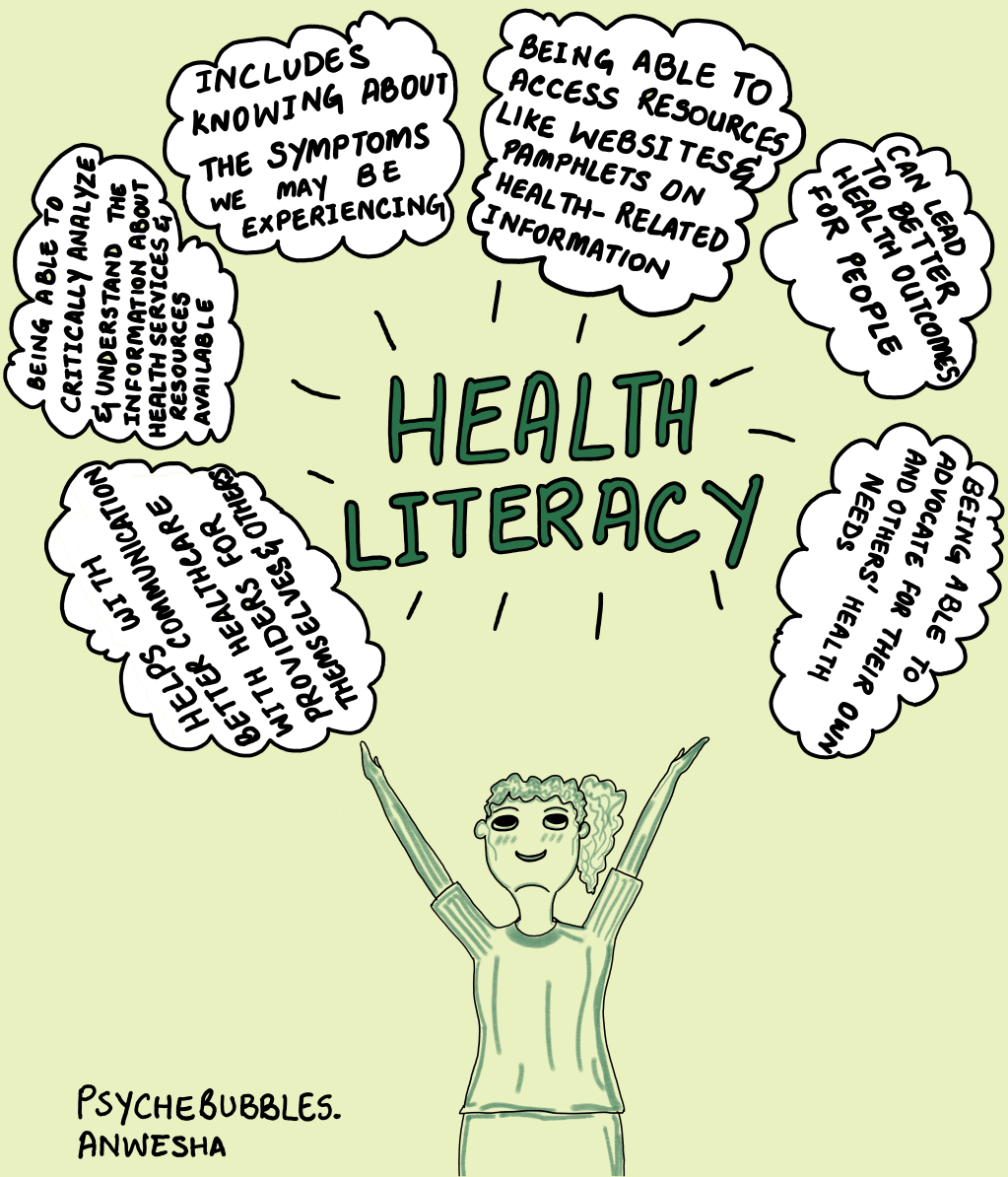
A significant part of healthcare is building awareness about different health conditions and their consequences on a person’s quality of life. Health literacy contributes to good health outcomes and helps people take a more active role in improving their own health. According to the WHO, health literacy is more than just being able to read health information, follow prescriptions or actions that promote better health; it is also the ability to critically analyse, and advocate for themselves (and others) about different health needs of individuals and society, as a whole.
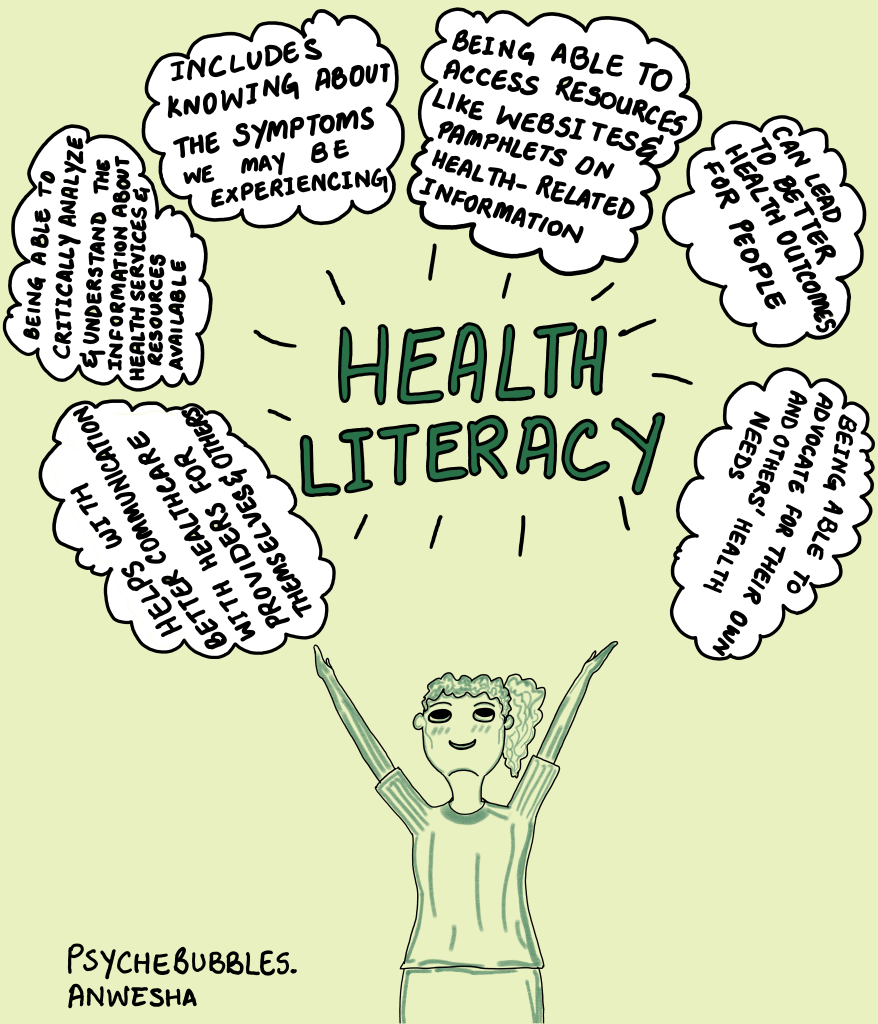
Graphic medicine has been known to be an effective tool to promote health literacy because people can share information using simpler language and cartoons or comics. According to the National Library of Medicine, graphic medicine is a tool for the author to express experiences of illness and health. It uses cartoons, comics or other artwork to talk about healthcare using speech/thought bubbles, texts, and visual representations. The combination of images and texts is meant to convey stories that might not be possible otherwise. Graphic medicine may sound like a new tool, but it truly isn’t. Cartoons and comics have been used to talk about personal health journeys for a very long time – probably since the 17th century and have been a well-oiled medium of health advocacy and even satirical depictions of healthcare through the centuries.
SO, WHAT ROLE DOES GRAPHIC MEDICINE PLAY IN HEALTH LITERACY?
Health Literacy (or being aware of one’s health and the healthcare resources) is a strong indicator of quality of life. Many people may feel alone in their journey to better health, the information available may use words that are difficult to understand, people may find it difficult to cope with her health and healthcare may seem scary to them. Graphic medicine alleviates the “clinical nature” of healthcare and makes information more palatable and opens doors for people to connect with the general nature of seeking help for themselves.
As an example, We may feel bored reading through pamphlets of information with dreary paragraphs (much like this blogpost) talking about anxiety, anxious thoughts and feelings and how overwhelming feeling anxious can become. But if we insert comic panels (you can click on the images) showing someone feeling anxious……………
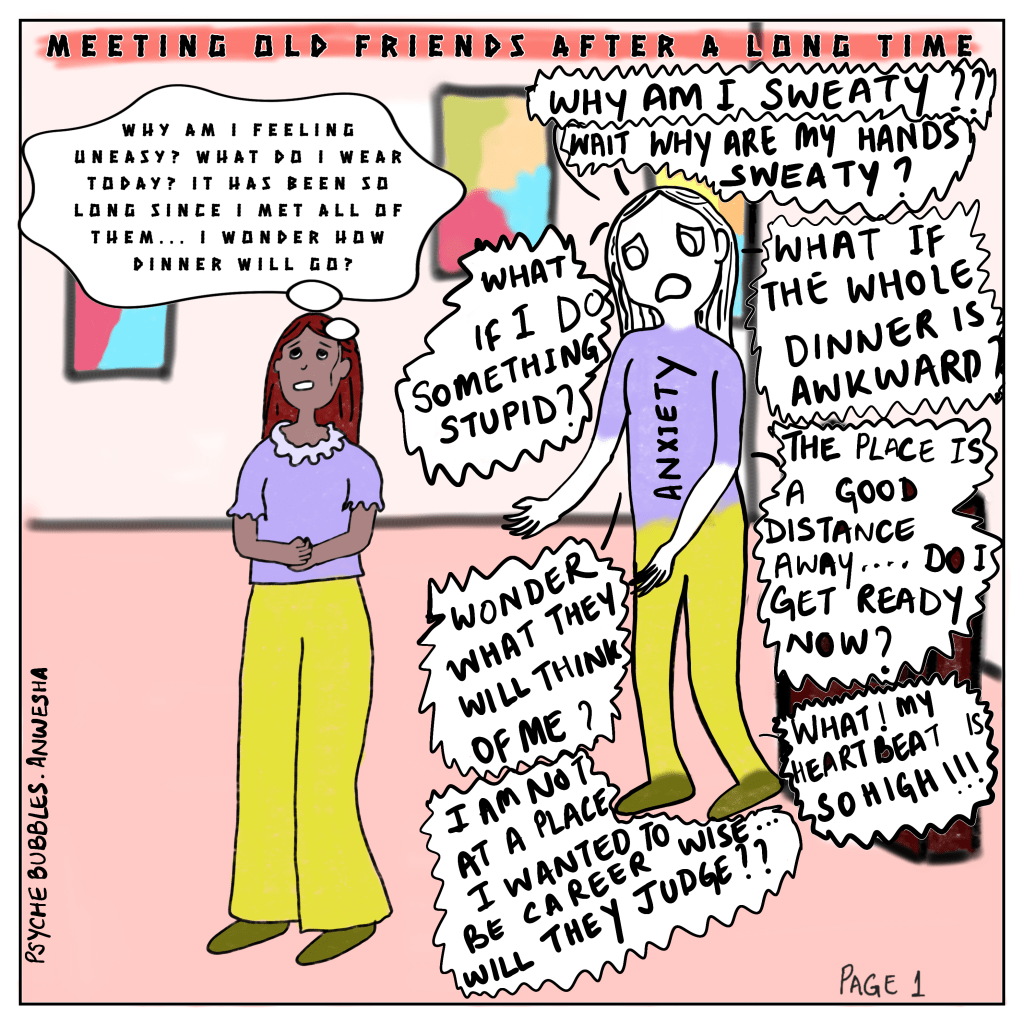
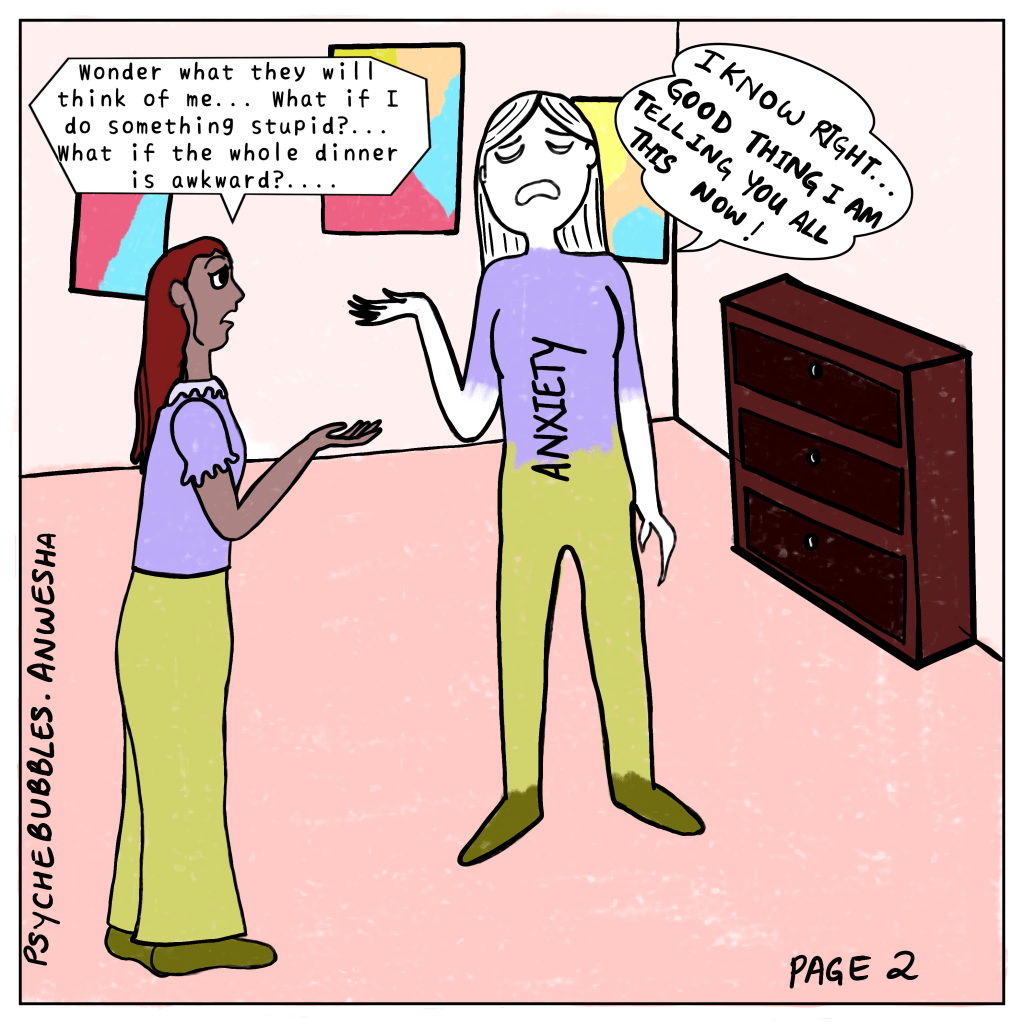
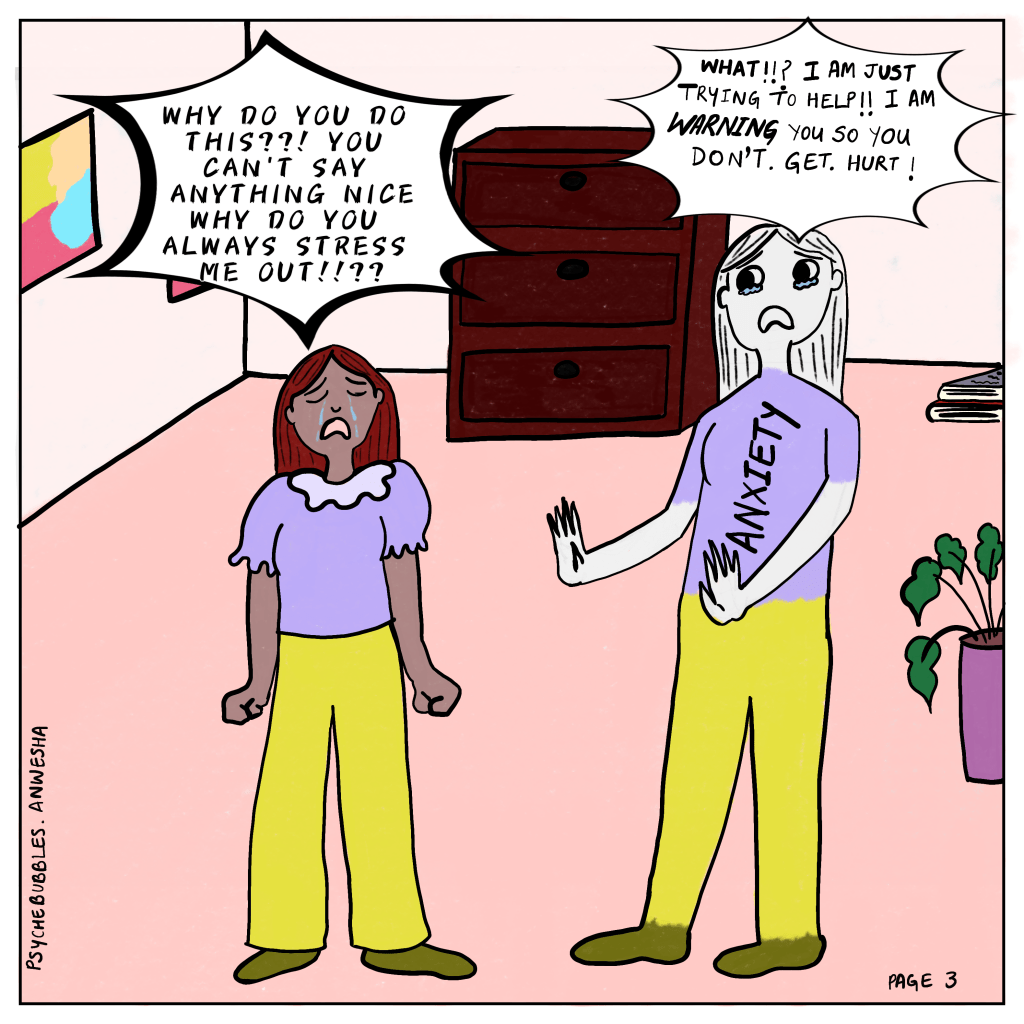
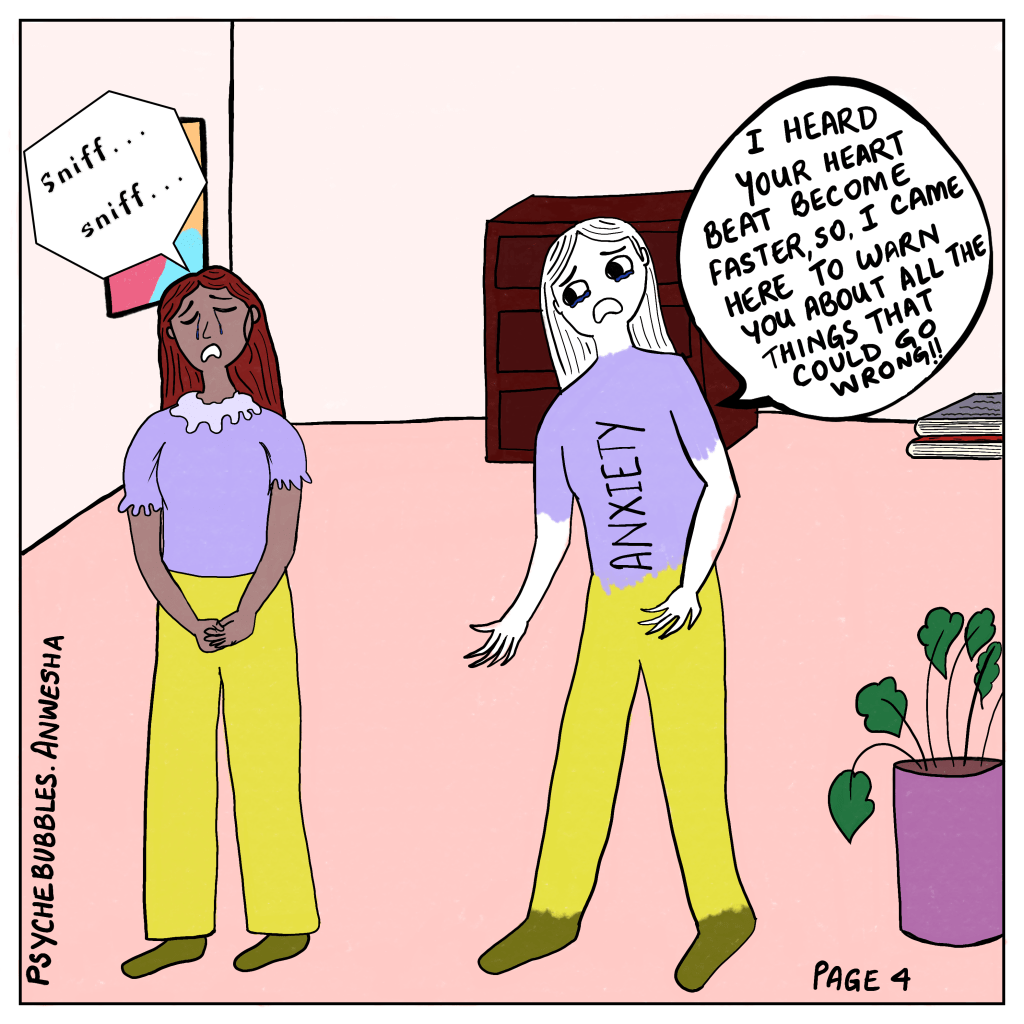
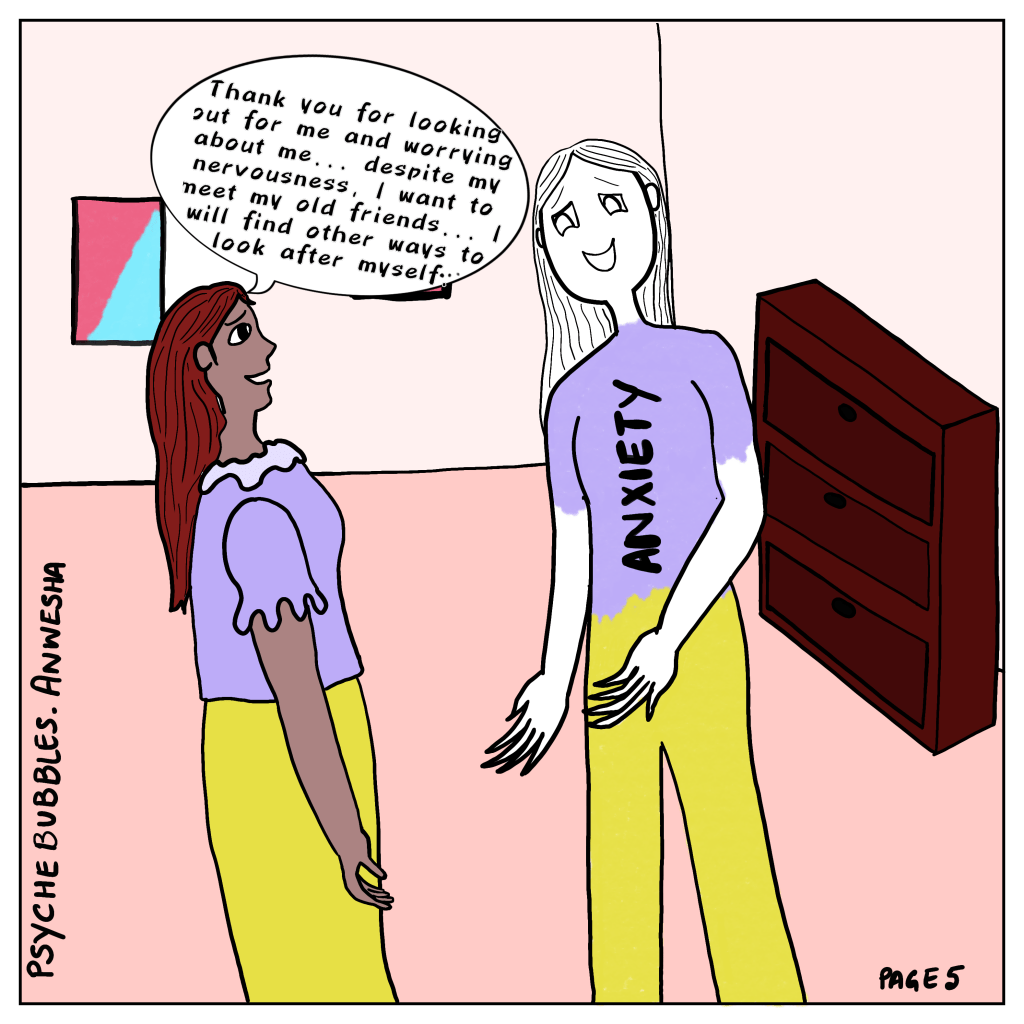
………………………………… we can tell a story of a person’s journey with their anxious thoughts using shorter texts and images.
HOW CAN GRAPHIC MEDICINE STAND OUT AS A MEDIUM FOR CREATING AWARENESS
- Graphic Medicine can attract attention from more people across different age groups and walks of life.
- Through graphic medicine information heavy topics can be conveyed using fewer words and the visual medium can help convey meaning too.
- Storytelling in comics and cartoons can make it more enjoyable for people to learn about health-related information.
- Authors and artists can use graphic medicine to share their personal health journeys which may help other people feel less alone.
GRAPHIC MEDICINE IN MENTAL HEALTH
Through this post, graphic medicine has been discussed through the general lens of healthcare. Graphic medicine has been used in the field of education, training and the field of medicine. It has been shown to increase empathy during medical training, improve communication skills, increase the ability to remember information and also encourage better understanding of information among other things (Febres-Cordero, et al., 2025).
Needless to say, mental health education has also used cartoons as a humorous addition to their textbooks talking about signs and symptoms of mental health disorders and other psychology concepts. Artists have used cartoons and comics to convey their mental health journey in poignant and light-hearted ways that has connected many people going through similar struggles. This makes it all the more necessary for mental health professionals to use this tool to reach more people to spread awareness about psychological health, different mental health struggles and reducing the stigma surrounding mental health.
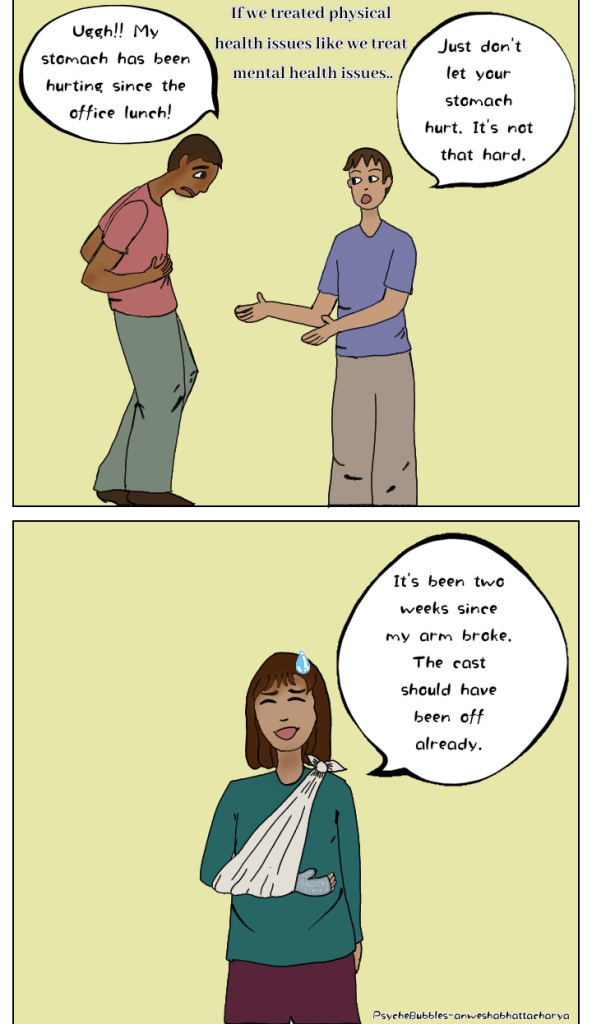
In a paper from 2025, graphic pathographies (cartoons talking about about health related concepts/experiences) can create opportunities to understand the personal and emotional nuances of a person’s mental health journeys; this can in turn foster more empathetic approaches to healthcare (Mompeán-Mejías, Juliá-Sanchis, 2025). Mental health in general, and various diagnoses (like personality disorders, certain mood disorders like bipolar disorders, and disorders like schizophrenia) have a lot of stigma associated with them. People have, in the past struggled to show many mental health disorders with sensitivity and empathy too- which can make people struggle to reach out for help. In worst case scenarios, even healthcare professionals donot show the empathy and patience in their work (which can be extremely harmful). Graphic medicine can encourage people to see the deeper aspects of mental health struggles beyond signs and symptoms listed in text books (movies or fictional stories created with care can do the same.
Graphic medicine can be a promising tool to talk about mental healthcare when done carefully, and increase the much-needed awareness about mental health among the general population. Additionally, illustrations can help people transcend barriers related to literacy or competence in different languages; this can help them share their health-related journeys (both mental and physical) with many people.
References
Drawing Blood Comics and Medicine. Drawing Blood. (2019, September 1). https://drawing-blood.org/about/
Febres-Cordero, S., Sherman, A. D., Kumsa, B., Klepper, M., Shanun, F., Grant, S., Duroseau, B., Leslie, S. L., Gupta, P., Béliveau, A., Landerfelt, P., Cohen, S., Lawrence, C., Linsenmeyer, W., Szczech, M., Balthazar, M. S., & Operario, D. (2025). A scoping review of graphic medicine interventions to promote changes in health behavior, health service engagement, and Health Outcomes. International Journal of Environmental Research and Public Health, 22(5), 657. https://doi.org/10.3390/ijerph22050657
Mompeán-Mejías, M. J., & Juliá-Sanchis, R. (2025). Graphic medicine in mental health nursing education: A phenomenological approach to using graphic pathographies as a pedagogical tool. Medical Humanities. https://doi.org/10.1136/medhum-2025-013281
National Institutes of Health. (n.d.). Graphic medicine: Ill-conceived & well-drawn! | NLM. U.S. National Library of Medicine. https://www.nlm.nih.gov/exhibition/graphicmedicine/index.html
Saltzman, E. B. (2023). Graphic medicine and radiology nursing: Using comics for education and stress mitigation. Journal of Radiology Nursing, 42(1), 62–66. https://doi.org/10.1016/j.jradnu.2022.07.009
Venkatesan, S., & Peter, A. M. (2019). Towards a theory of Graphic Medicine. Rupkatha Journal on Interdisciplinary Studies in Humanities, 11(2). https://doi.org/10.21659/rupkatha.v11n2.08
World Health Organization. (n.d.). Health literacy. World Health Organization. https://www.who.int/news-room/fact-sheets/detail/health-literacy
 Psyche Bubbles
Leave a comment