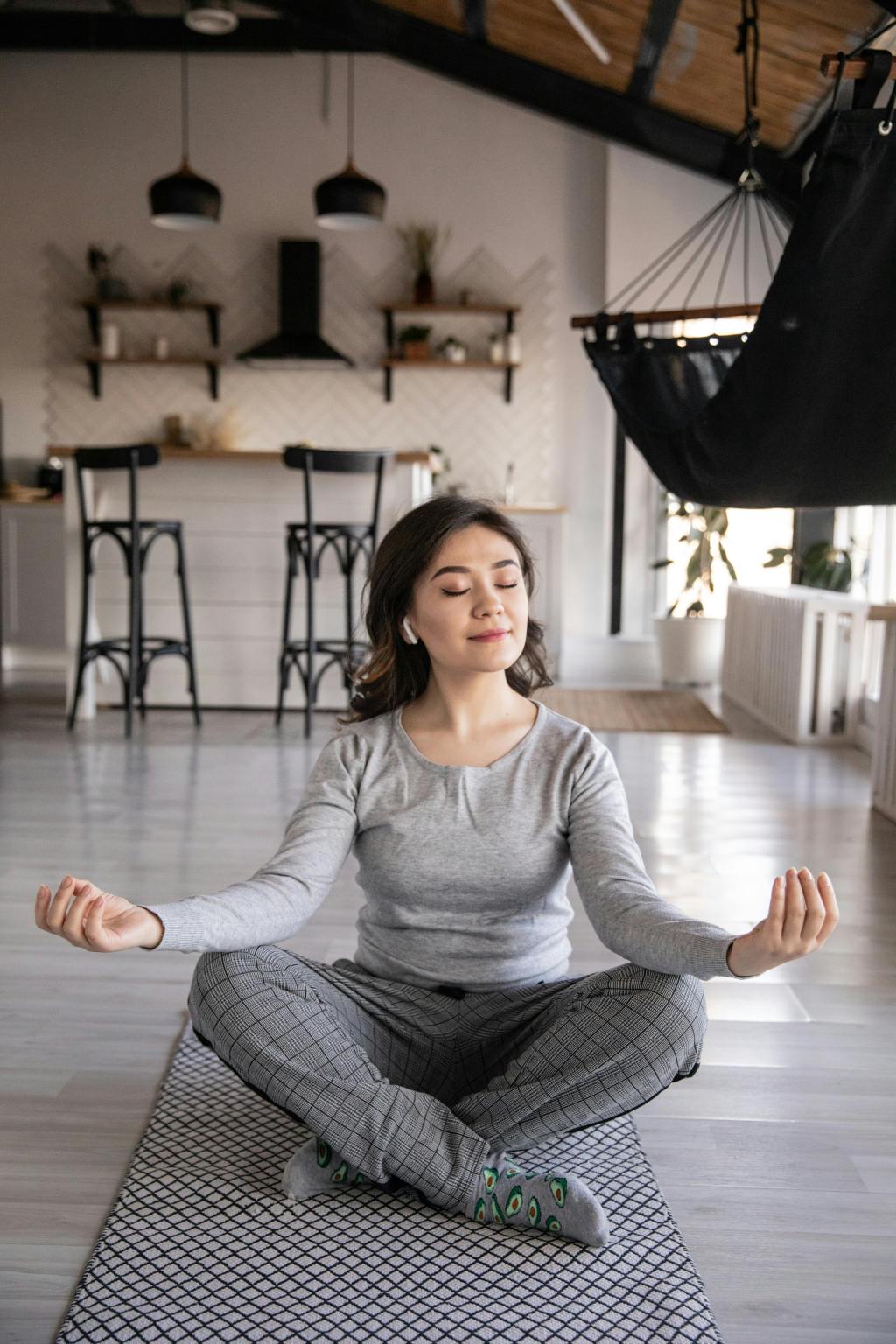
Important Note: I had written this post on mindfulness and published it on a different blog site called Milyin. I decided to republish it here on my own site after making some changes to the content. The content of this post is not meant to be a replacement for therapy or any medical interventions. Please consult a professional whenever needed.

Mental health concerns are more common than not in today’s world, and the number of people who experience them is increasing at a worrying pace. It cannot be denied that more people are aware of what constitutes mental health, the struggles, and the efforts involved, which in turn may contribute to more people being diagnosed as well as reaching out to professionals. But another worrying reason could be lifestyle-related stressors because of work stress, isolation (due to poor work-life balance), societal pressure from a young age to perform better in schools and then college, and then work; additionally, the increased cost of living adds to the stress. Psychologists and Psychiatrists have worked tirelessly to develop interventions and answer the questions posed by the growing mental health needs of people. And one of the popular tools used by therapists is mindfulness-based practices. So, now we can ask…
What is Mindfulness, and what are mindfulness-based practices?

Mindfulness is understood as a state of finding the middle ground between being self-aware and self-critical, i.e., it is a state of being aware of one’s experiences in the here-and-now but observing things without any judgment. This includes observing one’s thoughts, emotions, sensations, physical states, consciousness, and the surroundings. Mindfulness encourages one to be open, curious, and embracing of these experiences.
So, mindfulness, as proposed by Bishop and his colleagues, has at least two components –
· The ability to regulate one’s attention
· Being able to observe oneself with curiosity, non-judgmentally, and openness, and be present in the current moment.
Mindfulness-Based Interventions (MBI) are based on the principles of mindfulness, which in turn are rooted in Eastern traditions such as Hinduism and Buddhism.
Two of the most popular mindfulness-based practices are MBSR (Mindfulness-Based Stress Reduction) and MBCT (Mindfulness-Based Cognitive Therapy).
The former (MBSR) was the earliest group-level intervention that centered around mindfulness meditation, spread across 8 weeks, where 2 to 2.5 hours are dedicated to different kinds of meditative practices like mindfulness meditation, yoga-based practices, and mindful body scans (where people are asked to observe how each muscle groups feel, observe their breathing, and their thoughts non-judgmentally). It is effective when reducing anxiety, and in research, the result of effectiveness was seen as being comparable to CBT. But Mindfulness-based psychotherapy has developed extensively. MBSR, which started as a therapy for chronic pain, has helped people work through anxiety and stress. This has helped in the development of MBCT, which incorporates the practices of MBSR and combines them with cognitive theories and cognitive behavioral therapy. In a therapeutic setup, these interventions focus on training a person to shift their attention to the present and non-judgmentally observe themselves and their environment.
What are the reasons that mindfulness-based therapy is effective?

Mindfulness meditation has been researched since the 60’s in some or the other capacity, and the findings have been promising for the psychological well-being of many people. Some people who have a tendency to be mindful as they go about their lives have been known to be more empathetic, agreeable, responsible, optimistic, and have higher self-esteem, among many other characteristics. They also seem to experience less absent-mindedness, depression, difficulties in emotion regulation, avoidance tendency, and reactive thinking, among other things. Some people experienced lower degrees of negative automatic thoughts and were also able to let go of them (and not ruminate) in situations where they did get such thoughts.
Different brain scans have shown that people who are consistent with mindfulness-based practices, besides showing better psychological health, also exhibit physical changes in the brain. They showed a more active prefrontal cortex (important for thinking, decision making, problem-solving etc.) and less activation of the bilateral amygdala (amygdala plays an integral role in assessing threats, memory, learning, survival, fear and anger based emotions- people with anxiety disorders, depression or post-traumatic stress disorder show that in these situations the amygdala is affected) this means that people would be able to regulate their emotions better. Overall, this indicated a person’s ability to understand their situation better, label their emotions, and let go of negative self-talk.
Research has also shown that people who practice mindfulness-based meditation have more thickness in brain areas related to being aware of their own bodily sensations, like breathing, understanding different sensations they experience better, attention, and overall awareness. So, it is safe to say that mindfulness can be effective not only subjectively, but there have been other behavioral and objective measures to attest to that too.
Mindfulness Skills Don’t Always Make People Mindful

While research has shown mindfulness activities to be effective, they can also do a lot of harm. Just like we are cautious about side effects when we take medication, we also have to know that mindfulness activities might backfire.
Author of the book, The Body Keeps a Score, Bessel Van der Kolk, mentioned that people who have been subjected to trauma (people with PTSD or CPTSD) have difficulty being connected to their emotions. In such scenarios, mindfulness exercises can compel them to focus on their emotions and sensations in silence, which arise from their trauma- this can be extremely upsetting and re-traumatize many people. Having other tools and methods to manage these sensations might help with not feeling overwhelmed, but many times these additional techniques are not used liberally either.
Some people have experienced that mindfulness practices can bring up paranoia, mania, or bring to the surface vulnerability of bipolar conditions and feelings of confusion (this is not true for all, though); adding to the previous paragraph, these practices can essentially bring back repressed traumatic memories for some people with PTSD, too. This might also happen because research does not highlight the negative or adverse effects of mindfulness-based practices, as they highlight the positives (especially among people with stress-related or mood disorders or schizophrenia spectrum disorders). This almost creates a halo effect, and people might push themselves too much with mindfulness meditations or other techniques.
But that does not mean that we can deny the positive effects mindfulness has had for so many people. With any method we use to manage our emotions, thoughts, or behavior, we may need to always take steps that are challenging but not push ourselves to make fast changes. And for many people for whom mindfulness practices don’t work, other techniques can be more beneficial – some people find somatic techniques effective, some others find emdr really effective, others might find educating themselves about their symptoms while maintaining a steady daily routine much more calming, and medications are an option for many too.
Different mindfulness practices to try out
.png)
Here are different mindfulness techniques that many practitioners use (but please don’t push yourself if these techniques make you feel overwhelmed or anxious, and discontinue immediately)
- Body Scan: This technique can be used as part of a meditation where a person either sits or lies down and then gradually focuses on their body from toes to head or the other way around. The key is to only observe the emotions and sensations that arise as we “scan” ourselves, but not try to judge or change those emotions immediately.
- Slow Breathing: Our anxious thoughts and feelings can make us feel overwhelmed and not breathe steadily. This is a simple technique of closing our eyes and slowly breathing in and out, and shifting the focus from the thoughts and becoming mindful of our breathing.
- 5-4-3-2-1 grounding technique: This technique is meant to help slow us down by focusing more on at least five things we can see around us, four things we can hear in our surroundings, at three things we can touch in our surroundings, maybe two things we can taste (or genuinely take time to enjoy eating) and one thing we can smell that makes us calm. We don’t have to follow the sequence exactly and change how much/how long we focus on each of the senses (people who like collecting fragrances might find themselves enjoying using that to calm them).
- Walking meditation: This is another way to practice mindfulness. It is similar to sitting meditations, but we can slowly walk for 10-15 minutes and focus on the sensations of walking (our feet touching the ground) and how we use our body to move and how we are breathing during the walk, etc., i.e., being mindful of the here and now as we walk.
One common thread that ties the above-mentioned techniques is the tendency to focus on something without focusing on changing as and when we are doing the technique. So, it can include our senses, our surroundings, our interests, and even our thoughts.
Mindfulness might not be for everyone, but like every intervention, but for people who feel the benefits from mindfulness exercises, it can be a great way to regulate intense emotions, build a sense of self-awareness, and create a basis to accept aspects of life that might be out of our control.
 Psyche Bubbles
Leave a comment